Tuesday, August 25, 2020

So... there is creativity still...

Shortly after moving to Europe I asked an artist at an exhibition
where creative people lived.  I was told that due to the high cost of
living that everyone had left and live elsewhere.

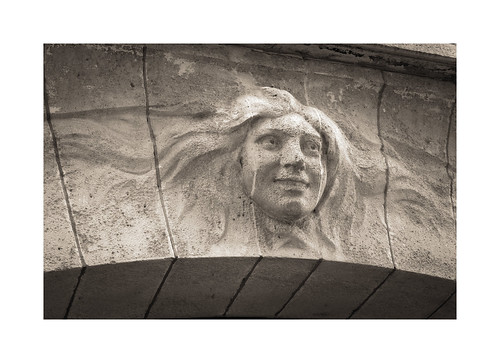
After this conversation I came to feel that the creative energy that made Paris the center of the world for so many years had been forced out with the gentrification, the commercialization, and the handing over of the city to tourism.

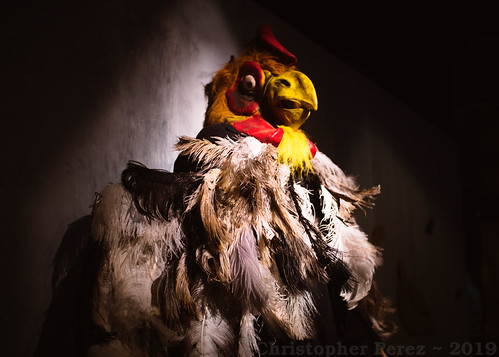
Yet this may not be the entire story. There is still something of that old spirit in Paris. It lives along the edges and in the corners of culture and society. But it's still here.

This little fact makes me happy.


Sunday, August 16, 2020

Why haven't I seen this before...?

I recently moaned and groaned about the current state of Parisian restaurants and such.

So wouldn't you know it? I was proven completely wrong the very next week.  A friend who was over from London to care for her Paris apartment suggested we meet at a restaurant near the Luxembourg Gardens.  The food was fabulous.  The prices were "correct."

This caused me to reconsider my moaning and groaning.  I needed to straighten up and fly right!

Indeed, Paris has changed dramatically over the past 40 years from when I first visited.  I find it all to easy to look back instead of looking out to see things as they really are.  Someone I read explained it this way.  Paris has changed from a sweet, naive, rather small feeling village into a city who's impacts (financial, political) are global.  Paris has grown up.

Where people used to lead small, insulated from the broader world kinds of lives (read "Zazi Dans le Metro"), they now lead well connected (cell phones, screen time) stressful existences.  This is why fast food is more common than ever, here.  Fewer people take the time to sit and enjoy a 2 hour lunch.

There used to be various local patois that were completely unique based on which small section of the city you found yourself in.  I experience this, though rarely now, when I visit small bars or restaurants in working class neighborhoods in the eastern portions of Paris.  But in general, the language that is shared is now peppered with English words and phrases, and the various patois have been washed from conversations.

The charm and wit (oh yes, it is here) and wisdom that defines Paris has evolved.  It really hasn't gone away (which I fear in the deepest darkest of nights).  I just have to look at things a little differently.  I have to take my blinkered sight and open it in a slightly different direction.

When we met our friend for lunch I was struck by how quaint and charming the restaurant was.  The wait staff were actually quite friendly and the owner was holding court with friends seated out on the street.  People were laughing and joking and sharing a very good time.  The food, as I said earlier, was fabulous.

As I have also said before, we carefully guard our secrets for fear they will be overrun by "the herd" and trampled like much of the city was during the decades leading up to "the confinement" during the outbreak of CV19.  Looked at in just this way, it reminds me that there are places and experiences to be had that remain uniquely Parisian, uniquely precious, and worth experiencing and living here for.

I have to learn that the past is not necessarily better than the present.  I really do.
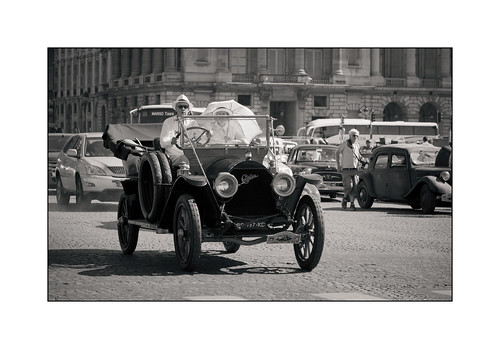

la traversee de Paris Estivale 2015 (redo)

Thursday, July 30, 2020

... during these times... transformation...?

Reading an article in the New Yorker ("Annals of History - Crossroads" by Lawrence Wright July 20, 2020) about an Italian doctor, Gianna Pomata, who lived and worked in the US, but returned to Bologna after she retired.  She said several things the piqued my interest.

The idea is that during times of pandemic (such as what we are currently experiencing) there is the possibility for humans to change their thinking.

The prime example the doctor gave was of the effects of the Black Plague in the 1300's.  Up to this point in European history medicine had been academic and abstract based on the writings of Greek and Roman physicians.  After the plague, medicine became a more observation and experience based discipline.  It became practical as physicians searched for effective treatments.

This was also the point in European history when fiefdoms were slowly replaced with city-states.  This fostered the development of business (Florence, Milan) and learning (Bologna) models.  Citizens were free and no longer bound to a disinterested land owner and this freedom through capitalism and learning continue through to today.

One of the biggest Black Plague changes was the realization that religion might not provide a decent salve nor answer for human suffering.  Religious processions and services had served to increase, not decrease, infection rates.  People's belief systems were challenged to look at the world differently and to seek ways that might actually protect each-other.

Fast forward to the present and to the US where so many people  refuse to wear a mask.  They will not protect themselves.  They have no interest in protecting others.  In fact, it seems that these people feel the current pandemic is tailor-made, politically conspired by "liberal elites" to deprive them of certain liberties.

It's very difficult for me to see the difference between 14century religious processions and anti-mask protests in the US.  People who hold to certain systems of "belief" spread highly contagious disease and led and will lead to a shocking number of deaths.

On the side of hope, one of the things that struck me when reading the New Yorker article was the possibility that enough people will remember when the canals of Venice were clear, when the mountain ranges usually obscured by human caused pollution were on display and beautiful to see.  Maybe enough people will remember when cruise ships couldn't drop careless tourists off at a port to wander through a city, too.  Perhaps enough people will remember when jets were fewer and city life was quieter and living was different, sweeter.

Might it be too much to think some people will remember these things and work to restore our world to the state we suddenly discovered when we were less busy, life was differently demanding, and when we were more aware of the limits of our desires and habits of consumption?
Paris deconfinement ~ 2020

Thursday, June 25, 2020

Where has it all gone...?

Jude and I watched an interview with Marcella Hazan and her husband Victor.

It got me to thinking and I looked up Victor Hazan.  He is known for his book on Italian wine. I came across this interview.

For me it a moving read.  A sense of nostalgia rose up and reminded me of my earliest memories of Paris.  There was a time when the food here was unique and wonderful. 

I remember having a great fish plate in a place that is long gone over near la tour Eiffel.  The flavors were brilliantly complemented by a white wine.

Then there was the time I ordered a bottle of vinted Mums and drank it all by myself.  I happily walked the streets of the Latin Quarter afterward enjoying a gorgeous late July warm summer evening.  The adventure had started in a rather empty Deux Magots.

Then there was the time I searched out the cheapest best rated restaurant in the city.  The wine was around 5 francs.  The plate was around 15 francs.  This was during a brief time when the French franc was 10 to 1 against the US dollar.  And you know what?  It was quite good and I really enjoyed the experience.

It's all too easy for me to look back and remember.  My memories remain clear. The city here has changed over the decades and I wonder what has happened to Paris.

I find that the original charm of the city of lights has been trampled to dust through years of tourists tromping through this place looking for that something that made it so attractive to experience in the first place.  The city has upended itself in its rush to emulate American business practices.  The traffic circulates very differently than it did years ago.

Coming back to food, the restaurants that cater to tourists offer such mediocre fare.  The tourists will be able to tell friends and family that they ate at such and such a place and who would ever know if the meal was actually no better than could be had back home?  The level of quality of experience here has dropped precipitously while prices have climbed into the stratosphere.

Certainly there are gems.  They tend to live quietly in overlooked out of the way little places.  The locals still can go for an excellent repas.  One place we know serves a brilliant cremant for around 3Euro, which bodes well for the coming 50cl cote de Rhone and incredible cassoulet. These kinds of places remain thankfully closely guarded secrets.

We now talk about finding the best dishes, the best restaurants, and best open air markets outside of Paris.  When we travel we are continually amazed at what we can find once we cross beyond the Perepherique.

All this came up because of something Vincent Hazan said about Venice.  I can't imagine going there these days.  Shiploads of tourists arrive and depart daily.  Yet Victor found something unique, there.  He and Marcella were able to live outside of the areas visited by tourists.  They were able to experience a different Venice from the one we typically see on video sharing sites.

Strange, isn't it? 


Halle Saint Pierre ~ Paris

Friday, June 19, 2020

Oh my...

I was reading an article in a recent New Yorker Magazine where the writer mentioned Marcella Hazan and what to do with the onion used to flavor a basic tomato sauce.

This reminded me that we have her complete works sitting on the bookshelf.

So, *flippity*flip*flip* went the pages... and... there it is.  Marcella's basic tomato sauce recipe.

Let's see here... she calls for Italian plum tomatoes... hmmm... in America tomatoes are closer cousins to cardboard than to anything edible... but we no longer live there... and our opportunities might be a bit different here in Paris...

Yesterday while shopping at our local Bio C'est Bon I spied the very kind called for in her recipe.  I weighed out a pound of them, picked up a pretty little onion, and remembered I had the right amount of butter in the freezer.

Having just finished following her directions I have seen the light, as it were.  Oh.  My.  Gawd!  _This_ is what real tomatoes taste like. 

The sauce is gorgeously simple and is absolutely brilliant.

I'm mildly surprised the Church hasn't yet risen Marcella Hazan to sainthood.